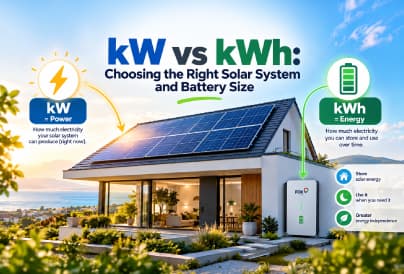



Australia has over 4 million solar-powered homes but only 1 in 40 have a battery. That means the vast majority of solar homes are exporting excess energy to the grid for mere cents, when they could be storing it at night and saving hundreds of dollars.
What changed? In 2025, everything shifted. Let’s explore why battery adoption stalled and why that’s finally changing.
Why Battery Uptake Lagged; Until Now
Despite the advantages, early solar adopters largely skipped installing batteries. Here’s why:
- High Cost: Residential batteries once ranged from $8,000 to $15,000, which was simply too expensive for most homeowners.
- Poor ROI Visibility: With limited feedback on savings, many weren’t convinced upfront costs were worth it.
- Low Awareness: Few solar owners knew it was possible to add a solar system with battery later; post-installation.
- Limited Incentives: Apart from some state-based programs, there were few incentives, and the process was often confusing and inaccessible.
What’s Changed in 2025: A $2.3B Reason to Reconsider

Everything turned in mid‑2025 with the launch of the Federal Cheaper Home Batteries Program:
- A ~30% upfront discount on eligible systems sized between 5–100 kWh (scalable up to 50 kWh incentive)
- Existing solar homes and new installs can qualify
- Administered by the Clean Energy Regulator under the Small-scale Renewable Energy Scheme (SRES) using STC incentive and usable battery capacity
- For many homeowners, this makes a real dent in cost and risk
How Affordable Is a Battery Now? Let’s Break It Down
Consider this real-world example:
- A 10 kWh battery load ($10,000 retail) drops to $5,000 after the incentive*
- Add state grants, Virtual Power Plant (VPP) incentives, and export tariffs, and ROI accelerates
- Payback time falls from 10–12 years to potentially 6–7 years, depending on energy usage and tariff structures*
This makes storage a clearer, smarter upgrade now; especially for households with high daytime solar output or early evening energy demands.
*Actual savings and payback times may vary based on eligibility, installation, usage factors, and location within Australia.
Batteries = More Than Just Savings
Solar batteries offer more than electricity bill relief. Key benefits include:
- Reduced grid exports: Capture more of your solar generation instead of selling for low feed-in rates
- Power continuity during grid outages
- Grid resilience when aggregated via Virtual Power Plants (VPPs)
- Future-readiness, including support for EV charging and smart household systems
- Climate action, by reducing reliance on peak fossil fuel supply
Could You Qualify for the 30% Battery Discount?
Here’s how to assess your eligibility for the federal government solar battery incentive:
- Battery capacity between 5–100 kWh usable (incentive applies up to 50 kWh)
- Installed by an SAA-accredited installer
- Connected to a rooftop solar setup; new or existing solar system with battery
- Commissioned on or after July 1, 2025
If you tick all boxes, you’re eligible and early action matters as incentives taper off between 2026–2030.
Not Sure Where to Start? Here’s What to Do Next
- Book a solar/battery consult with Solar Junction
- Check system compatibility; does your current inverter support storage?
- Request a quote to compare costs before and after the incentive
- Plan for future upgrades; select a battery that supports solar panel packages with EV or VPP functionality
Why 2025 Is the Perfect Year to Catch Up on Battery Storage
There are reason industry experts are calling 2025 the tipping point for home batteries in Australia.
With electricity prices continuing to rise, feed-in tariffs declining, and storage tech becoming more accessible, the window for maximum return is now.
Whether you’re already enjoying the benefits of solar or just getting started, pairing your system with a battery unlocks the full potential of your investment.
Plus, with government backing and smarter, longer-lasting batteries on the market, you’re not just buying hardware; you’re investing in energy freedom for the next decade.

Conclusion: The Battery Tipping Point Is Here
The biggest barrier which is battery cost is finally gone. Now more than ever, Australian homeowners have a compelling reason to upgrade.
With the federal home battery incentive, 2025 is the best time to add storage, reduce grid dependence, and future-proof your solar setup.