Massive Battery Savings Have Landed Claim Yours Today!

28kWh Solar Battery for Large Homes: Complete Guide
HOME > 28kWh Solar Battery for Large Homes: Complete Guide
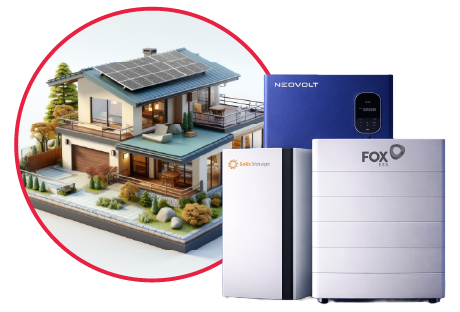

Choosing a 28kWh solar battery is not the same as choosing a standard residential battery. For large homes, energy planning goes beyond simple storage; it becomes about managing how and when energy is used.
Unlike smaller systems, a large capacity home battery system is designed for households with higher demand, multiple occupants, and significant evening usage. A 28kWh battery is not a default upgrade. It is a high-capacity solution intended for homes where energy consumption patterns justify investment.
A 28kWh battery refers to the amount of usable energy it can store and supply.
In real-world terms, a 28kWh solar battery Australia can:
Example Usage
|
Appliance / Usage |
Approx. Runtime (28kWh Battery) |
|
Lighting + appliances |
10–14 hours |
|
Air conditioning (moderate use) |
6–10 hours |
|
Mixed household load |
Overnight coverage |
For a solar battery for large house, this capacity provides meaningful energy coverage, not just partial support.
Energy usage patterns in Australia have changed significantly:
This shift has led to greater interest in solar batteries for high consumption homes, where daytime generation alone is no longer enough.
Solar panels generate energy during the day, but most households consume more electricity in the evening.
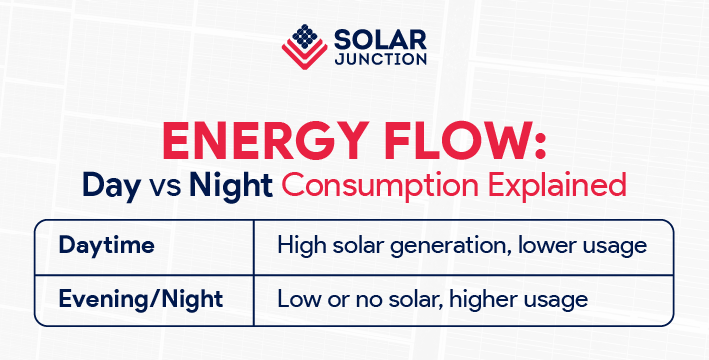
Typical Energy Flow
|
Time of Day |
Energy Situation |
|
Daytime |
High solar generation, lower usage |
|
Evening/Night |
Low or no solar, higher usage |
This mismatch is the main reason homeowners consider a 28kWh solar battery to store excess energy and use it later.
Many large homes already produce enough solar energy. The challenge is not generation; it is utilization.
Without storage:
A large capacity home battery system shifts this balance by allowing homeowners to store and use their own energy, improving efficiency and reducing reliance on grid supply.
Not every home requires a battery of this size. Consider these four key factors:
Larger batteries require sufficient solar generation to charge effectively.
High daily usage increases the value of storage.
Homes with heavy evening demand benefit most.
If you are exporting large amounts of energy, storage may improve usage efficiency.
A solar battery for large house in Australia becomes relevant when these factors align.
A 28kWh solar battery can:
However, it does not:
Performance depends on how well the battery matches household usage.
Battery size must align with solar system capacity.
Example Matching Table
|
Solar System Size |
Recommended Battery Range |
|
6.6kW |
8–14 kWh |
|
10kW |
12–20 kWh |
|
13kW+ |
20–30 kWh |
A battery size for 13kW solar system often falls within the 20–30kWh range, making a 28kWh battery a suitable option.
Mismatch Risk
A larger battery does not always mean better performance.
Efficiency depends on:
A solar battery for high consumption homes works best when it cycles regularly; charging during the day and discharging at night.
Oversized systems that do not cycle efficiently can reduce overall value.
A large capacity home battery system should be viewed as part of a broader energy plan.
Planning ahead ensures the battery remains relevant over time.
A 28kWh solar battery makes the most sense for:
It is less suitable for smaller homes or low-consumption households.
Before choosing a solar battery for large house, ask:
If most answers are yes, a larger battery may be justified.

A 28kWh solar battery Australia is not a standard upgrade; it is a strategic decision for high-consumption households.
For homes with large solar systems, high energy usage, and strong evening demand, it can significantly improve how solar energy is used.
However, the key to success is not size alone, but alignment between solar generation, battery capacity, and household behaviour.
If your household has high energy usage, significant evening demand, and exports excess solar energy, a larger battery may be suitable.
It may not fully charge, leading to underutilization and reduced efficiency.
Yes, but efficiency improves when the battery cycles regularly rather than remaining partially unused.
Usage timing determines how often the battery charges and discharges, directly impacting performance.
It can be, especially for growing households or future energy needs.
Yes, a properly sized system can support appliances like air conditioning and household loads during evening hours.

Higher rebates available
only until 30 April 2026