



Ensuring your solar system is set up correctly can make all the difference between a smooth, cost-saving experience and future situations. Before your solar installers pack up, take the time to review a few essential elements. This quick solar installation checklist can help homeowners avoid common pitfalls and guarantee optimal performance.
Why the Solar Installation Checkup Matters?
A solar installation checklist helps ensure that your system is installed correctly and that all aspects of the installation process meet quality standards. Not only does the solar checkup guarantee that you receive everything you paid for, but it also sets the stage for efficient, trouble-free operation.
Skipping these steps could lead to problems like ineffective monitoring, documentation issues, or even minor roof damage.
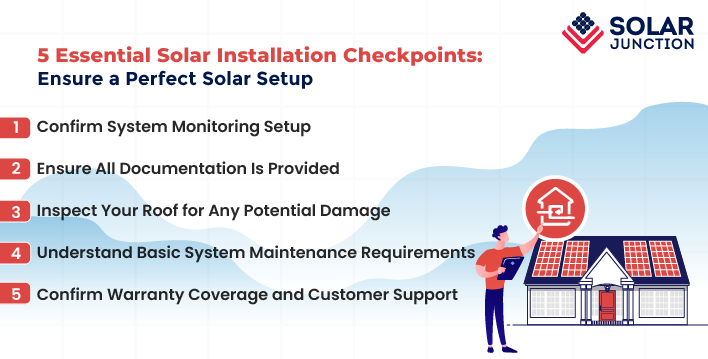
1. Confirm System Monitoring Setup
Why It's Important: Monitoring is like the dashboard of your car—it provides a real-time view of how much energy your system is generating and how efficiently it's running. Often included in the system price, a functional monitoring system is crucial to understanding your energy savings.
What to Watch Out For: After a busy installation day, some installers might overlook this final step or face issues connecting the system to Wi-Fi. They might leave you to resolve the connection issues, resulting in delayed or incomplete monitoring.
How to Check: Make sure the monitoring system is fully functional before they leave. If they claim they'll resolve issues later, be firm—it's part of the installation and should work from day one.
If they've completed the installation after dark, set a reminder to contact them the next day to ensure monitoring is fully operational once the sun is out.
2. Ensure All Documentation Is Provided
Why It Matters: Documentation might seem like a minor detail, but it's actually essential. According to Australian standards, installers are required to provide comprehensive documentation with every installation. This paperwork is crucial for understanding your system, and claiming warranties, and can even be necessary for insurance claims.
Common Issues: Some installers may forget or neglect to provide the full set of documents. However, this is not optional; it's a requirement and a critical part of the solar panel installation inspection process.
What to Request: Ask for all necessary documentation upfront. This includes user manuals, warranty papers, compliance certificates, and any other relevant paperwork.
Some companies now offer digital documentation via QR codes located on the switchboard or meter panel, which provides easy access to a complete documentation package.
3. Inspect Your Roof for Any Potential Damage
Why It's Crucial: Solar installations involve a lot of activity on your roof, which can sometimes lead to minor damage. Small chips, cracked tiles, or ridge point shifts might seem insignificant initially but can lead to leaks or other issues down the line.
What Often Gets Missed: Minor damage may not be immediately visible, and some installers might patch up cracked tiles with silicon instead of informing the homeowner about the issue.
Steps to Take: Before installation begins, take a few pictures of your roof. After installation, carefully inspect the roof or ask the installers to review the condition with you. Documenting the before and after can be helpful in case any issues arise.
Additionally, don't hesitate to ask about any repairs or modifications they made during the installation.
4. Understand Basic System Maintenance Requirements
Why Maintenance Matters: Solar systems are not "set-and-forget" devices. Regular maintenance is essential for ensuring that your system runs smoothly and efficiently over the years.
What's Commonly Overlooked: Some homeowners are told their systems require no maintenance, which is inaccurate. Additionally, some installers might recommend using harsh cleaning products or high-pressure washers, which can damage panels.
What to Do: Ask your installers for a basic maintenance guide as part of your solar installation checklist. This guide should include the do’s and don'ts, how often to clean the panels, and tips for identifying performance issues.
Keeping a maintenance log, along with your documentation, can also help if you ever need to make a warranty claim.
5. Confirm Warranty Coverage and Customer Support
Why It's Important: Understanding the warranty coverage and support options for your solar system is key to long-term peace of mind. Warranties vary by component—such as panels, inverters, and mounting—and each may have different coverage periods.
Being aware of what's covered under warranty and for how long can save you from unexpected repair costs in the future.
What to Look Out For: Make sure you receive a clear explanation of each component's warranty terms, including what's covered, the process for making a claim, and any regular maintenance needed to keep the warranty valid.
What to Do: Ask your installers to walk you through the warranty details and support process, and ensure these are documented with your installation paperwork. Reliable installers will often have a dedicated support line and clear instructions on how to reach them if any issues arise post-installation.
Being well-informed about your system's warranty can make a significant difference in resolving any issues swiftly, keeping your system efficient and effective for years to come.

Conclusion: Set Yourself Up for Solar Success
By following this solar installation checklist, you can ensure that your solar system is installed correctly and fully operational before the installers leave.
From monitoring to roof inspections, the solar check-up list will help you avoid common issues and maximize the performance of your new solar system. Proper setup and documentation now mean fewer headaches later and a higher chance of reaping the full benefits of your investment.