
AC-Coupled vs DC-Coupled Solar Batteries: What’s the Difference and Which Is Right for You?
HOME > AC-Coupled vs DC-Coupled Solar Batteries: What’s the Difference and Which Is Right for You?
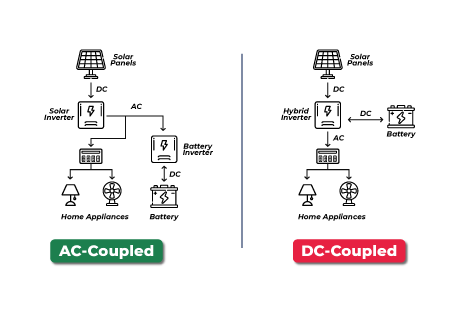

An AC-coupled battery has its own inverter and connects to your switchboard, so it can be added to almost any existing solar system. A DC-coupled battery connects to a hybrid inverter before the power is converted, so it loses slightly less energy. Retrofits usually suit AC coupling; new solar-and-battery installs usually suit DC.
Ask two installers for a battery quote and you may get two different answers about coupling. One offers an AC coupled battery that bolts onto what you already have; the other wants to replace your inverter. Both can be right.
Solar panels produce DC. Batteries store DC. Your house runs on AC. Coupling describes where in that chain the battery connects.
An AC coupled battery system sits after your existing solar inverter. Panels send DC to the inverter, the inverter makes AC for the house, and the battery converts some of that AC back to DC to store it, then back to AC in the evening.
That extra back-and-forth is wasteful, but in exchange you get a battery that works with almost any string inverter already installed.
A DC coupled battery connects on the panel side of a single hybrid inverter that handles both solar and storage. Energy moves from panels to battery as DC, with a DC-to-DC step rather than a full trip through AC.
This is what people usually mean when they ask what is a hybrid inverter: one box doing the job of two, which is why a hybrid solar system takes up less switchboard space.
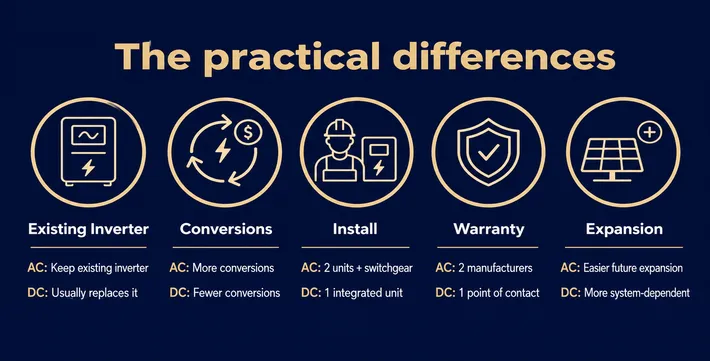
Comparing AC vs DC coupled battery setups on what actually changes your quote:
AC coupling is usually the sensible path. Your inverter stays, your feed-in arrangement stays, and the install is less disruptive. Our guide to adding a battery to an existing solar system covers the checks involved. The exception: if your inverter is near end of life, a hybrid replacement beats spending money on gear you’ll rework in two years.
DC coupling is generally the better starting point, since there’s no existing inverter to preserve. Most new 6.6kW solar system and 13kW system packages with storage are built around a hybrid inverter.
Three-phase homes need careful load balancing, and not every hybrid inverter handles it the same way. Anything pairing a 14kWh battery or larger with a big array should have both options costed.
Round-trip efficiency measures how much energy you get back out compared with what went in. Manufacturer datasheets typically quote figures in the high 80s to low 90s per cent, with DC-coupled products usually a little higher because they skip a conversion step.
The gap is a few percentage points: real, but rarely enough to outweigh replacing a working inverter. Ask for the figure from the actual datasheet rather than a general claim.
Coupling type doesn’t decide whether you get backup. Wiring and configuration do. Both AC coupled battery storage and DC-coupled setups can run a backup circuit, but only if the product supports it, the installer wires a dedicated changeover, and you nominate which circuits stay live.
A battery without backup wiring shuts down in an outage. Raise it before the quote is finalised, not after.
The federal Cheaper Home Batteries Program is active, offering around 30% off the upfront cost of battery systems between 5kWh and 100kWh nominal capacity through small-scale technology certificates. Support has been tiered by battery size since changes commenced on 1 May 2026.
Coupling type has no bearing on eligibility. It does change the hardware line on your quote: a DC-coupled retrofit includes a new inverter, an AC-coupled one doesn’t. Program settings can change, so confirm current details with DCCEEW before you commit.

Answer those five and the coupling decision usually makes itself.
Solar battery technology, rebates and product options continue to change. If you find our guides useful, you can add Solar Junction as a Preferred Source on Google to make our latest solar and battery articles easier to find.
The right answer depends on your inverter model, switchboard, usage pattern and roof. Solar Junction can review your setup and quote both options where both are viable.
Not universally. DC coupling is typically more efficient for new installs. AC coupling is usually better value when you already have a working inverter, because it avoids replacing equipment with years left in it.
Most modern systems, yes. Very old inverters, undersized inverters and proprietary systems locked to discontinued products are the exceptions. An installer needs to check your model first.
No. A hybrid inverter is required for DC coupling, but an AC coupled battery brings its own and works alongside a standard string inverter.
No. Eligibility under the Cheaper Home Batteries Program is based on capacity and compliance requirements, not how the battery connects to your solar.

