


Switching to solar energy is an excellent way to reduce electricity bills and embrace renewable energy. But what happens when your solar panels generate more electricity than you use? This is where solar net metering comes into play.
Net metering of solar allows homeowners to earn solar credits for the excess energy they export to the grid. These credits can then be used to offset electricity costs when their system isn’t producing power, such as during the night or on cloudy days.
In this blog, we’ll explain how net metering of solar works, the benefits of net metering, and why it’s an essential part of maximizing savings with a solar system.
What is it?
Net metering of solar is a billing mechanism that enables solar system owners to send excess electricity back to the grid and receive credits in return.
Instead of storing unused solar energy in a battery, your system automatically exports surplus energy to the electricity grid. The utility company then provides solar credits for the amount of energy you export.
These credits can be used to reduce your electricity bill when your solar system isn’t generating enough power.
This system ensures that you get the most value from your solar panels, even if you can’t use all the energy they produce in real time.
How Does It Work?
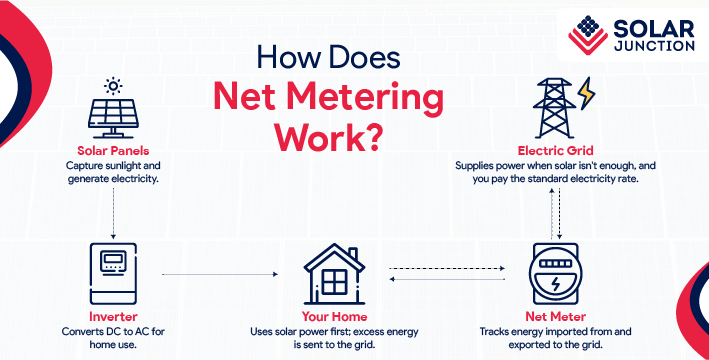
1. Solar Energy Generation
During the day, solar panels generate electricity from sunlight. This energy is first used to power your home’s appliances and devices.
2. Excess Energy Exported to the Grid
If your solar panels produce more electricity than your household consumes, the surplus energy is automatically sent to the grid.
3. Earning Solar Credits
For the excess energy exported, your electricity retailer provides solar power credits, which appear on your electricity bill. These credits reduce the cost of grid electricity used when your solar system isn’t generating enough power, such as at night.
4. Using Solar Credits
At times when solar panels don’t produce enough energy—such as during the night or on cloudy days—your home draws electricity from the grid. Instead of paying full price for this energy, you can use your solar credits to offset the cost.
Advantages of Net Metering
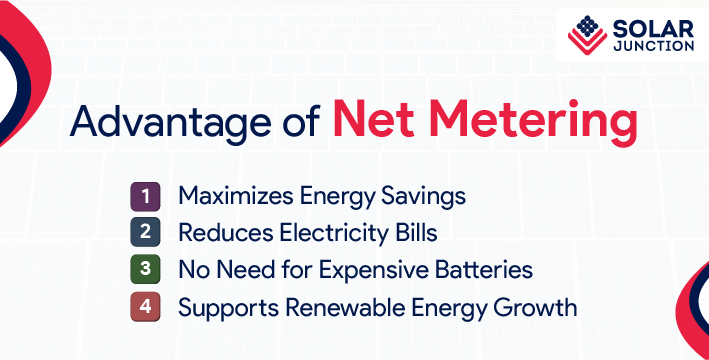
1. Maximizes Energy Savings
One of the biggest advantages of net metering is that it allows homeowners to maximize the financial returns of their solar system. Instead of losing unused solar energy, net metering ensures that every unit of electricity produced has value.
2. Reduces Electricity Bills
By earning solar credits, you can significantly lower your electricity costs. This is particularly useful in homes where daytime energy consumption is lower than energy production.
3. No Need for Expensive Batteries
Solar batteries can store excess energy, but they come with additional costs. Net metering of solar provides a cost-effective alternative, allowing you to use the grid as virtual storage without additional expenses.
4. Supports Renewable Energy Growth
Net metering encourages homeowners to adopt solar power, reducing reliance on fossil fuels and promoting clean energy usage.
How Net Metering Differs from Feed-In Tariffs
Many homeowners confuse solar net metering with feed-in tariffs. While both involve exporting solar energy to the grid, there are key differences:
Feature | Net Metering | Feed-In Tariffs |
|---|---|---|
How It Works | Excess energy earns credits to offset future electricity use | Energy exported to the grid is sold at a fixed rate |
Credit Usage | Credits reduce future bills | Payments are received based on energy exported |
Savings Potential | Higher savings as credits are used to offset full retail electricity prices | Lower savings as feed-in tariffs are often lower than retail electricity rates |
While feed-in tariffs offer direct payments, net metering provides greater long-term savings by offsetting higher electricity rates.
Is Net Metering Available Everywhere?
Solar net metering policies vary by state and electricity retailer. Some regions offer full net metering, while others may have limitations on credit rollover or different rates for exported energy.
Before installing a solar system, check with your local electricity provider to understand their specific net metering policies.
Why Choose Solar Junction for Net Metering?
At Solar Junction, we specialize in designing and installing high-performance solar systems that maximize the benefits of solar net metering.
Our expert team ensures your system is optimized to generate surplus energy, allowing you to earn valuable solar power credits and significantly reduce electricity costs. We stay updated on the latest net metering policies, helping you navigate the process with ease.
With high-quality solar technology, professional installation, and personalized guidance, Solar Junction makes transitioning to solar energy seamless and rewarding.
Let us help you harness the full potential of solar net metering and take control of your energy future!

Final Thoughts: Is Net Metering Right for You?
If you’re planning to install a solar system, net metering is one of the most effective ways to maximize your savings. It ensures that every kilowatt-hour of electricity your panels generate is put to good use, either by powering your home or earning solar power credits.
With the benefits of net metering including reduced electricity bills, no need for expensive storage, and support for renewable energy, it’s a must-have feature for solar-powered homes.
At Solar Junction, we help homeowners understand net metering policies and design systems that maximize savings. Contact us today to learn more about how net metering can benefit your home and energy costs!