


Quick answer: From 1 January 2027, the federal battery rebate gets smaller because the STC factor used by the Cheaper Home Batteries Program drops from 6.8 to 5.7 certificates per kWh of usable capacity. That is about 16% fewer certificates for the same battery. The size tiers and eligibility rules stay the same, and the factor drops again on 1 July 2027.
The federal battery rebate changes on 1 January 2027 are a scheduled step-down, not the end of the program. Batteries installed from that date earn fewer small-scale technology certificates (STCs) per kWh, so the upfront discount on an eligible battery will usually be smaller than it is today.
If you are comparing quotes, these home battery rebate changes come down to one date: the day your battery is installed and signed off. This guide covers the new numbers, what they mean for common battery sizes, and how to decide whether to install before 31 December 2026 or plan for 2027.
What changes on 1 January 2027?
On 1 January 2027, the STC factor for home batteries drops from 6.8 to 5.7. The STC factor sets how many certificates a battery can create for each kWh of usable capacity, and those certificates are what your retailer turns into the upfront discount on your quote.
Here is what changes and what stays the same:
- Changes: the STC factor falls from 6.8 to 5.7 for batteries installed from 1 January to 30 June 2027.
- Changes again: it falls to 5.2 from 1 July 2027, then keeps dropping every six months.
- Stays the same: the size tiers introduced on 1 May 2026, the 50 kWh usable capacity cap and the eligibility rules.
- Stays the same: you still don't apply to the government yourself. The discount appears on your retailer's quote.
The Clean Energy Regulator publishes the full schedule on its solar batteries page:
| Installation period | STC factor per usable kWh |
|---|---|
| May to December 2026 | 6.8 |
| January to June 2027 | 5.7 |
| July to December 2027 | 5.2 |
| January to June 2028 | 4.6 |
| July to December 2028 | 4.1 |
| January to June 2029 | 3.6 |
| July to December 2029 | 3.1 |
| January to June 2030 | 2.6 |
| July to December 2030 | 2.1 |
Source: Clean Energy Regulator.
How much smaller will the battery rebate be?
For a battery with 10 kWh of usable capacity, the federal battery rebate changes cut the certificate count from 68 to 57 STCs. That is 11 fewer certificates, or about 16% less support, for exactly the same battery.
Larger batteries lose more certificates because they earn more to begin with. The percentage drop is the same for every size, because the tiers apply in the same way under each factor. Your retailer turns these certificates into the discount on your quote, based on what STCs are worth at the time.
Estimated STCs by usable capacity
| Usable capacity | Installed by 31 Dec 2026 (6.8) | Jan to Jun 2027 (5.7) | Jul to Dec 2027 (5.2) |
|---|---|---|---|
| 10 kWh | 68 STCs | 57 STCs | 52 STCs |
| 14 kWh | 95 STCs | 79 STCs | 72 STCs |
| 20 kWh | 119 STCs | 100 STCs | 91 STCs |
| 28 kWh | 152 STCs | 127 STCs | 116 STCs |
| 40 kWh | 164 STCs | 137 STCs | 125 STCs |
How these estimates were worked out:
- The first 14 kWh earns 100% of the STC factor, each kWh from 14 to 28 kWh earns 60%, and each kWh from 28 to 50 kWh earns 15%.
- Certificates are rounded down to whole STCs.
- These are estimates, not quotes. Your retailer decides how the STC value is shown on your quote.
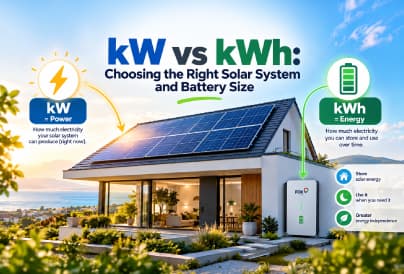
You can check any size yourself with the REC Registry STC calculator. Use the battery's usable capacity, not the nominal capacity on the label. Our guide to kW and kWh for solar and batteries explains the difference.
Not sure what your battery would earn under each rate? Solar Junction can show the STC count and planned installation date on a written quote. Call 1300 345 365 or request a battery quote.
Why the federal battery rebate is changing
The federal battery rebate changes follow a set schedule because the government links the STC factor to falling battery prices. The Clean Energy Regulator says the factor is adjusted so the discount works out to around 30% of the upfront cost of installing a battery.
The current schedule comes from regulation amendments that started on 1 May 2026. They followed the government's 13 December 2025 announcement that the program would grow from original estimates of $2.3 billion to an estimated $7.2 billion over four years. The same amendments moved the step-downs from once a year to every six months and added the size tiers. Our May 2026 Cheaper Home Batteries Program update covers those earlier changes.
In plain terms, the discount shrinks. If battery prices keep falling, the percentage you save on a typical battery may stay close to where it is now. Neither outcome is guaranteed, so compare real quotes rather than relying on the headline rate.
Who is still eligible after 1 January 2027?
Eligibility for the Cheaper Home Batteries Program does not change on 1 January 2027. According to the Clean Energy Regulator, a battery must meet these conditions to create STCs:
- It is new and has not been installed or claimed before.
- It is installed with a new or existing solar PV system.
- Its nominal capacity is between 5 kWh and 100 kWh. STCs are only paid on the first 50 kWh of usable capacity.
- It appears on the Clean Energy Council's approved battery list.
- If grid-connected, it can take part in a virtual power plant (VPP). You don't have to join one.
- It is installed by a Solar Accreditation Australia accredited installer with battery endorsement, in line with AS/NZS 5139:2019 and state electrical safety laws.
Two rules catch people out:
- One battery claim per premises. For grid-connected homes, STCs can be claimed for one battery per meter (NMI). Extra batteries aren't eligible after that first claim, so a small battery now and more storage later usually means the later capacity gets no rebate.
- The battery has to stay put. It must remain at the property until the end of 2030 or the end of its warranty, whichever is later.
If you already have panels, our guide to adding a battery to an existing solar system covers the inverter checks involved.
Does the installation date or the contract date set your rebate?
The installation date sets your rate. Under the program's eligibility rules, a battery counts as installed when the work is complete and the certificate of electrical compliance is signed. Signing a contract or paying a deposit in December does not lock in the 6.8 factor if the job is finished in January.
If you are aiming to install before 1 January 2027:
- Ask for a confirmed installation date in writing.
- Ask the retailer what happens to your price if the job moves into January.
- Check whether your switchboard or meter needs work first, as that can add time.
- Don't let the date push you into the wrong size. Rushing is one of the common solar battery buying mistakes.
Should you install before 31 December 2026 or wait?
Install before 31 December if your battery is already sized, quoted and ready to book. Waiting can make sense if you are still working out what you need, because a well-sized battery in 2027 can be better value than a rushed one in 2026.
Installing now may suit you if:
- you have a quote for an eligible battery and a confirmed installation date
- your existing inverter is compatible, or the upgrade is already in the quote
- your bills show high evening and overnight use that a battery can shift
- you want a battery of 14 kWh usable or larger, where the drop in certificates is bigger
Waiting may suit you if:
- you haven't looked at your bills or interval data yet
- you are planning new panels, an EV charger or a renovation in 2027
- you would be choosing a smaller battery just to beat the date
- you want time to compare more quotes and products
The Clean Energy Regulator has stepped up battery inspections and added photo evidence requirements from 1 March 2026. A careful installation by an accredited installer matters more than the date on the calendar.
How to plan your battery around the 2027 rebate changes
Solar battery rebate changes reward getting the size right before you sign. Work through these steps:
- Get 12 months of bills, or the interval data from your electricity retailer.
- Work out your evening and overnight use, then size the battery on usable kWh.
- Think about the 14 kWh line. Above 14 kWh, each extra kWh earns 60% of the full rate, and above 28 kWh it earns 15%. A larger battery can still suit homes with high evening use or an EV, but the rebate covers less of it. Compare a 14kWh solar battery system with a 28kWh solar battery system, or read our 14kWh vs 28kWh size guide.
- Confirm the battery and inverter are on the approved list and the inverter is VPP-capable.
- Check the retailer is a New Energy Tech Consumer Code approved seller and look up the installer's SAA accreditation.
- Ask for a written quote that shows the usable capacity, number of STCs and planned installation date.
- Check your state. Some states run their own battery programs, and the Clean Energy Regulator says to confirm whether you can claim both. NSW households can start with our NSW battery incentive guide.
Check your battery options before 1 January
If you are weighing up a battery ahead of the federal battery rebate changes, Solar Junction can review your bills, check whether your existing solar and inverter are suitable, and show the STC count and planned installation date on a written quote. We can also talk through whether waiting suits your home better..

Key takeaways
- The federal battery rebate is not ending on 1 January 2027. It is getting smaller.
- The STC factor drops from 6.8 to 5.7, then to 5.2 on 1 July 2027.
- A 10 kWh battery earns 11 fewer STCs and a 28 kWh battery 25 fewer, about 16% less in both cases.
- The installation date, not the contract date, decides which rate applies.
- Eligibility rules and size tiers stay the same through these federal battery rebate changes.