
Solar energy systems are a long-term investment designed to provide clean energy for years, but like all technology, they eventually require maintenance, upgrades, or even replacement. Knowing when it's time for a solar system upgrade is essential to ensure optimal performance and continued savings on your energy bills.
In this guide, we'll walk you through the key indicators that may suggest it's time for a solar panel system upgrade or solar panel replacement and offer tips on upgrading solar panels to meet current energy demands.
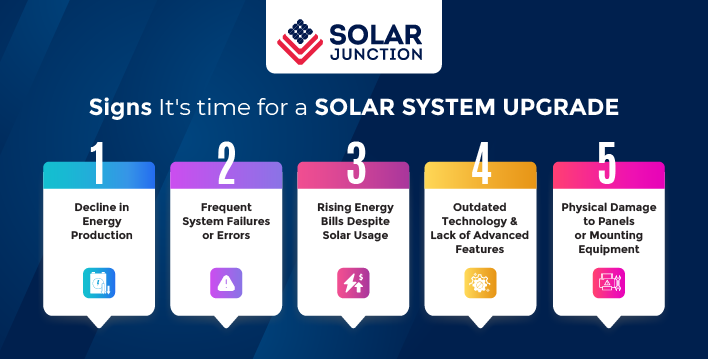
Decline in Energy Production
One of the clearest signs that you need a solar panel system upgrade is a noticeable drop in energy production. If your system no longer generates as much power as it once did, there may be underlying issues, such as aging components or damaged panels.
- Monitoring Production Levels: Regularly track your solar system's energy output. If you observe a consistent decrease that can't be explained by seasonal changes, it's a signal to investigate further.
- Solar Panel Replacing: Over time, solar panels lose efficiency, typically around 0.5% to 1% per year. If your panels are over 10-15 years old, they may no longer produce enough energy to cover your household needs, warranting a solar panel replacing.
Upgrading solar systems to newer, more efficient models can help you restore and even increase your system's energy output. Modern solar panels offer improved efficiency, allowing you to maximize the amount of energy generated even with limited roof space.
Frequent System Failures or Errors
If you find yourself frequently engaging in solar system troubleshooting to resolve performance issues or deal with errors, it could be an indication that your system needs an upgrade. Common issues may include inverter problems, wiring faults, or component malfunctions, all of which can reduce the reliability and performance of your system.
- Inverter Issues: The inverter is a critical part of any solar setup, converting the DC power generated by your panels into AC power for your home. Inverters typically last 5 -10 years, so if your inverter is older, it might be time for an upgrade.
- Upgrading Solar Panels and Inverters Together: If your inverter is malfunctioning and your panels are also aging, consider a full solar panel system upgrade. Newer inverters often come with better efficiency ratings, advanced monitoring features, and longer lifespans, contributing to improved system reliability.
Regular solar panel system maintenance can help catch these issues early, but if problems persist, an upgrade may be the most cost-effective solution.
Rising Energy Bills Despite Solar Usage
One of the main reasons homeowners install solar systems is to save on energy bills. If your energy bills have been rising even though you rely on solar power, it could indicate that your system is underperforming.
Possible causes include panel degradation, inverter inefficiencies, or simply an increase in your household's energy needs.
- Increased Energy Demand: If you've added new appliances, started working from home, or expanded your household, your existing system may not be powerful enough to meet these increased energy demands.
- Solar Panel System Upgrade: Upgrading your solar panels and inverter to a higher-capacity system can help cover the additional energy requirements, preventing costly reliance on grid power.
In cases where energy demand has significantly increased, a solar panel replacing with newer, high-efficiency models is highly beneficial. Modern panels offer greater output, meaning fewer panels are needed to produce the same amount of energy, making a solar panel system upgrade both economical and efficient.
Outdated Technology and Lack of Advanced Features
The solar industry is constantly evolving, and technological advancements have led to more efficient, durable, and feature-rich solar systems. If your system lacks modern features like smart monitoring, energy storage compatibility, or optimizers, it may be time for an upgrade.
- Smart Monitoring: Newer systems often come with integrated monitoring systems that allow you to track performance, spot issues, and optimize usage through a smartphone app. If your current system doesn't offer this, upgrading can give you greater control and transparency over your energy production.
- Energy Storage Compatibility: Adding battery storages to your system allows you to store excess energy generated during the day for use at night or during outages. Older systems may not be compatible with modern batteries, so upgrading can make it possible to incorporate energy storage for increased energy independence.
Upgrading solar panels and inverter setup can provide these advanced features, making your system not only more efficient but also more adaptable to your lifestyle needs.
Physical Damage to Panels or Mounting Equipment
Damage to solar panels or mounting equipment due to weather, debris, or age can lead to reduced efficiency or, in severe cases, complete system failure.
Regular inspections as part of solar panel system upkeep can help identify physical damage early, but some types of damage necessitate a solar panel replacement or system upgrade.
- Cracks, Discoloration, or Water Damage: If you notice visible cracks, discoloration, or signs of water damage on your panels, it's a strong indication that replacement is necessary. Damaged panels not only reduce output but may also lead to further issues in your system.
- Rusty or Loose Mounting Equipment: Secure mounting is crucial for system stability and safety. If your mounting equipment shows signs of rust or instability, an upgrade may be essential to maintain the integrity of your system.
A solar system upgrade, including new panels and mounting equipment, can help prevent future damage and ensure your system remains efficient and secure.
Eligibility for Rebates and Incentives
In many regions, incentives or rebates are available for solar panel system upgrades, making it financially advantageous to replace outdated components. These programs are often designed to encourage the adoption of more efficient and environmentally friendly technologies.
- Solar system Rebates: Some programs provide incentives specifically for solar panel replacement or upgrades to energy-efficient equipment. Check with your local energy provider or government agency to see if you qualify.
- System Size Expansion Incentives:In some cases, homeowners can benefit from incentives when upgrading to larger systems. This can be especially valuable if your energy needs have increased and you're considering system expansion.
Taking advantage of these rebates can reduce the overall cost of a solar panel system upgrade, allowing you to modernize your setup and maximize energy production without a significant financial burden.

Conclusion
Recognizing the signs that indicate a need for a solar panel system upgrade is crucial for maintaining energy efficiency and saving on electricity costs.
From declining energy production to outdated technology, there are several indicators that suggest it may be time for upgrading solar system panels or conducting a solar panel replacement.
Regular solar panel system maintenance and solar system troubleshooting can help you identify these issues early and make timely upgrades, ensuring your system remains efficient and reliable.
If you're noticing any of these signs, consider consulting with a solar energy professional to assess your current system and determine the best course of action.
A well-timed solar system upgrade can enhance your system's longevity, increase energy independence, and ultimately save you money in the long run.